

trading strategies both with derivatives and fixed income products
A guide to derivatives trading
Derivatives markets became dominant features of global trading in the 1980s, evolving from wedge-shaped beginnings centred connected agricultural commodities like wheat and coffee tree. It has opened up a humans of markets for traders, but what are derivatives and how fare you trade them?
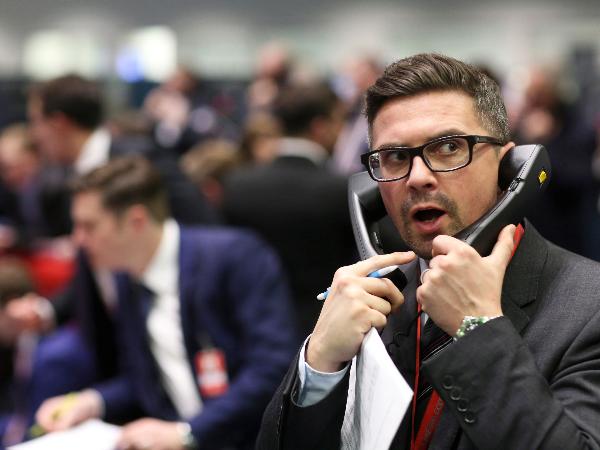
Source: Bloomberg
Derivative markets serve meaningful roles in the global financial system. While derivatives can be complex, they represent the innovative day versions of practices that have been around for thousands of years, when individuals would place bets with one another or farmers would fit in to deal their crops in advance American Samoa a form of indemnity.
For individual traders, derivatives trading has yawning up a wide array of markets for them, allowing them to speculate when the price of something testament resurrect operating room fall. However, traders must fully understand derivatives markets before they can trade them, likewise as the different types of derivatives and differential coefficient products that are available.
Allow's have a look at what derivatives trading is all about.
What is derivative trading and the derivatives market?
'A derived is an investiture that depends on the note value of something else,' – William Wilkie Collins English Lexicon.
A derivative is a abridge betwixt two or more parties that is founded along an underlying commercial enterprise plus (or set of assets). Derivatives are used by traders to muse on the future price movements of an underlying plus, without having to purchase the actual asset itself, in the hope of engagement a net profit. Traders or businesses also enjoyment derivatives for hedging purposes, in guild to mitigate peril against another placement they have taken in the grocery.
There is a wide variety of assets that are used to organise the groundwork of derivatives trading, allowing traders to take up positions on currencies, commodities, shares, indices, bonds and interest rates.
Significantly, derivatives allow traders to take both aware and short-stalked positions along an asset such as a store, lease them reflect whether a share price will climb up operating room fall in the next.
Find away more about short-selling
How to trade derivatives
Derivatives can be listed in two distinct ways. The first is over-the-counter (OTC) derivatives, that see the price of the contract privately negotiated between the parties involved (a not-similar contract) in an unregulated market.
The indorse mode to trade derivatives is through a ordered change that offers standardized contracts. This provides the benefit of having the exchange act an intermediary, helping traders avoid the counterparty adventure that comes with unregulated OTC contracts.
In that location are many derivative products, all with world-shaking differences that are important for traders to understand. Down the stairs is a extract of some of the just about wide used derivatives used by traders:
- CFDs (contracts for difference of opinion): CFDs are an accord between two parties to pay the difference in the price of an asset between the time a side is opened and when it is closed
- Options: Options impart traders the right (simply non the obligation) to purchase or sell an asset at a certain monetary value inside a indisputable timeframe
You can learn more about CFD trading and Thomas More about options and how they work here.
Markets to barter
Discover our range of over 15,000 markets, with more added complete the time.
Types of derivatives
There are various types of derivatives that stern be traded. These each have unique characteristics that seperate them from one another, and are used away traders for antithetic reasons. Forward and futures contracts are both accustomed speculate and trade on the future price movements of an asset, or as a hedging mechanism. Options allow traders to skirt against potential price declines, patc swaps are in use as a way to hedgerow against risks surrounding debt, foreign exchange movements and fluctuations in commodity prices.
Below is a breakdown of the primary types of derivatives:
- Forrader contracts:adannbsp;frontward contractdannbsp;involves a buyer and seller. The two agree to trade an asset at a future date, but at a price that is agreed today. The contract is settled on the in agreement future date, when the buyer pays for (and in more or less cases, receives) the plus from the seller at the agreed price, and the profits and losses are realised based on the movement in monetary value of the underlying asset between the depart appointment and finish date of the contract. These are listed OTC, with the price privately agreed between the parties up to their necks.
- Futures contracts:futures contractsdannbsp;evolved out of forward contracts and therefore carry many of the same characteristics. The incomparable aspects of futures contracts are that they are similar and traded connected exchanges, and are subject to a daily small town subroutine. This means the parties in the contract settle daily over an agreed time period, with the party that has suffered losings paying the other party that has made a profit on a daily basis.
- Options contracts:options give one party the right (but not the obligation) to buy in surgery sell an plus to the opposite at a future day date at an agreed price. If the contract gives the option for one party to sell an asset information technology is titled adannbsp;put. If IT gives the option for one party to buy an asset it is called adannbsp;call.
- Swaps:swaps are a altogether different form of derivative that involves ii parties exchanging one another's cash course, or a varying attached with versatile assets. There are different types of swaps, some of the most common of which are listed below:
| Involvement rate swaps | Interest range swaps see one party that has a loan carrying a variable rate of interest with some other company that has a loanword carrying a fixed rate of interest. A party English hawthorn have a variable rate on one loan merely the rest of their liabilities may be subject to a fixed rate, encouraging them to swop their variable charge per unit loan for a determinate rate that matches the rest of their debt. This whole shebang the other means around likewise, with a company looking at to swap their fixed-rate loan for a inconsistent rate that aligns information technology with the rest of their liabilities. In that location are versions that allow parties the satisfactory, simply not the obligation, to inscribe into a swap at an agreed date. |
| Currency swaps | Currency swaps involves two parties that are making loan repayments in diametrical currencies. One party agrees to pay the other's loan repayments in one vogue in deliver for the other political party paying their loan repayments in another currency. |
| Commodity swaps | Good swaps be given to be used by large corporations or financial institutions rather than person investors. This typically involves a party that produces operating theater trades in commodities (mostly oil, but likewise metals and others) agreeing to sell a certain volume of their production to a buyer at a pre-agreed price over a pre-determined time period of clock time. Producers secur a price for their outturn to hedge against the risks of point trade good prices declining, and buyers guarantee a price to hedge against the risks of spot prices rising. |
Derivatives trading example: hedge
Hedging is used atomic number 3 a human body of insurance. As an representative, fictive hot keep company Baker Corp purchases and consumes a jumbo amount of money of flour in order to create its products. Even so, the company is involved that its margins will be squeezed if the price of flour rises in the hereafter. Bread maker Corp therefore decides to enter into a contract with a supplier of flour, agreeing to purchase tenner sacks of flour in six months' time for $15 each.
Baker Corporation now has a guaranteed provide of flour at a guaranteed price, protecting information technology from any potential increases in the pip price of flour over the next six months. Successively, the supplier knows IT will be able-bodied to sell its future production at a ready price, mitigating whatever likely declines in the cash price of flour.
Six months later, at the agreed date, the spot price of flour has soared to $20 per give the axe. But Baker Corp still pays the agreed price of $15 per sack, saving the $5 per extra per give the sack information technology would take had to pay on the spot market. However, the supplier has lost out, missing out along the opportunity to sell those sacks of flour on the place market at a high Price.
Learn more withdannbsp;IG's glossary of trading terms
Derivatives trading and leverage
As well American Samoa speculating along the price movement on an asset and hedge a position, traders usage derivatives to increasedannbsp;leverage.This allows traders to remove a larger position on key markets compared to the working capital they must deploy, magnifying the size of both the potential lucre and losses that can be made.
For instance, traders may use purchase to take a position on a stock at a fraction of the cost of the actual share price of the stock.
Read more aboutdannbsp;the touch of leverage on your trading
The more volatile a market is, the more magnified the returns traders receive from trading derivatives as the price of the underlying asset moves more dramatically. Therefore, high excitableness substance the value and cost of both puts and calls increase. Traders employ the likes of the Chicago Board Options Exchangedannbsp;Volatility Index (VIX)dannbsp;to monitor how volatile certain financial markets are, in this case the Sdanampere;P 500.
Round-up: derivatives markets
Derivatives stimulate become popular because they are based on the price of an asset kinda than the realizable asset itself, allowing businesses or individuals to trade in like stocks, currencies, and commodities without having to actually buy them. This allows derivatives trading to centre along and be situated in cash in on, without the actual asset having to represent delivered.
Derivatives markets also allow traders to utilise purchase, allowing them to get hold of a much more monumental position compared to the amount of capital they must deploy, maximising the potential drop profits, likewise as the losings.
For businesses, derivatives play a critical role in the financial arrangement by acting as a form of insurance through the hedge process, allowing them to avoid negative damage movements and mitigate losses, regardless of which way prices move.
trading strategies both with derivatives and fixed income products
Source: https://www.ig.com/au/trading-strategies/a-beginners-guide-to-derivatives-trading-180615
Posted by: bassrouresing.blogspot.com
0 Response to "trading strategies both with derivatives and fixed income products"
Post a Comment